
Walk into any fitness studio today and you are likely to find Pilates on the timetable. It might be mat Pilates, reformer Pilates, Pilates fusion, Pilates HIIT, hot Pilates, or something else entirely. The word has become so broadly applied that it now covers an enormous range of practices — some of which bear little resemblance to what Joseph Pilates actually created.
This is not a minor distinction. What you practice, how you practice it, and what system it is built upon will determine what you get from it. So if you are choosing a Pilates practice — or reconsidering the one you already have — it is worth understanding what classical Pilates is, what contemporary Pilates is, and why the difference matters more than the wellness industry tends to admit.
What Is Classical Pilates?
Classical Pilates is the method as Joseph Pilates designed it. He called it Contrology — the complete coordination of body, mind, and spirit — and he spent his lifetime developing a precise system of exercises, apparatus, and principles through which the human body could be conditioned, corrected, and restored.
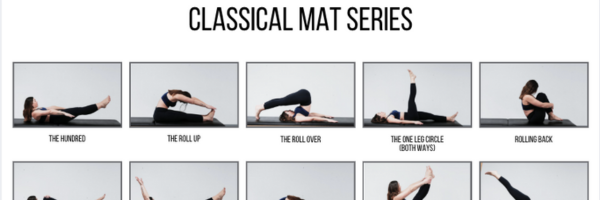
The method is built around a specific sequence of exercises on the mat, a series of
exercises on each piece of apparatus, and a set of guiding principles: breath, concentration, centring, control, precision, and flow. These are not suggestions. They are the architecture of the practice. Remove them, or soften them into abstraction, and the method begins to dissolve.
Joseph Pilates developed his apparatus — the Reformer, the Cadillac, the Wunda Chair, the Ladder Barrel, the Ped-o-Pul, the Foot Corrector, and the rest — specifically to develop the body in ways that mat work alone could not. Each piece was designed with a precise function. The exercises performed on them follow a logical sequence. Everything connects. Nothing is arbitrary.
Classical Pilates is taught as a complete system. The mat exercises prepare the body for the apparatus. The apparatus deepens and extends what the mat begins. A student progresses through the work in a structured way, building strength, flexibility, coordination, and awareness over time. The method does not change to suit a trend. It changes the person who practices it.
What Is Contemporary Pilates?
Contemporary Pilates is the broad category of practices that use Joseph Pilates’ work as a starting point before modifying, expanding, or departing from it — sometimes significantly. Contemporary approaches typically incorporate principles from physiotherapy, sports science, and biomechanical research that postdates Pilates himself. They may alter the exercise order, change the apparatus, add new exercises, remove old ones, or prioritise individual therapeutic goals over the integrity of the classical system.
It is worth saying clearly: contemporary Pilates is not without value. For certain therapeutic and rehabilitation applications, a flexible, responsive approach to the method has merit. Good contemporary instructors are often highly skilled and bring genuine understanding of the body to their teaching.
But there is a substantial difference between thoughtfully adapting a method and simply
using its name. And this is where much of the contemporary Pilates landscape becomes
difficult to navigate.
The Problem with Dilution
The wellness industry is not always honest about what it is selling. Pilates — the word, the brand, the aesthetic — has become commercially valuable in ways that have very little to do with the practice Joseph Pilates developed. The result is a proliferation of classes, studios, and programmes that carry the name but deliver something quite different.
A forty-five minute reformer class with a pop music soundtrack and thirty people on
machines, moving quickly through a circuit designed to elevate heart rate and tone the
glutes, is not Pilates in any meaningful classical sense. It may be a reasonable workout. It
may serve a particular market. But calling it Pilates conflates two very different things and does a disservice to both.
The concern here is not snobbery. It is clarity. When a student comes to classical Pilates
expecting something they have experienced in a contemporary or fusion class, they may be surprised by the depth of what the classical method demands. And when a practitioner spends years in a diluted version of the practice without realising it, they may never discover what the system is actually capable of delivering.
The Case for Classical
It Is a Complete System
This is the most important thing to understand about classical Pilates. It is not a collection of exercises. It is a system — one in which everything is deliberately connected. The sequence is not arbitrary. The apparatus is not interchangeable. The principles are not decorative.
When you learn classical Pilates properly, you are not learning individual movements. You
are learning a language. The mat exercises prepare the body for the reformer. The reformer prepares the body for the Cadillac. The Cadillac, the Chair, the Barrels, and the Ped-o-Pul each address aspects of conditioning and correction that the others cannot. The system is comprehensive precisely because it was designed to be.
Contemporary approaches that cherry-pick from this system, or that modify its structure
significantly, inevitably lose something of this coherence. They may focus deeply on one
area — core stability, for instance, or spinal rehabilitation — while leaving the rest of the
body and the broader aims of the method unaddressed.
It Respects the Body’s Intelligence
Joseph Pilates was not guessing. He was a careful, methodical observer of the body — how it moves, where it compensates, what it needs to function well. The sequencing of his exercises reflects decades of observation and refinement. Exercises that appear simple often contain layers of complexity and corrective intent that only become apparent over time.
Contemporary Pilates, particularly in its more casual forms, often prioritises immediate
sensation over long-term development. Exercises are chosen because they feel satisfying or produce visible results quickly. The harder, less immediately gratifying work — spinal articulation, deep hip flexor lengthening, the slow cultivation of true core connection — can fall away in favour of what is more marketable.
The classical method is less immediately forgiving. It asks the student to meet it where it is, rather than meeting the student where they are comfortable. This can feel demanding at first. Over time, it feels like the only honest approach.
The Apparatus Matters
One of the ways contemporary Pilates most clearly departs from the classical tradition is in its relationship to the apparatus. The reformer has become a kind of cultural shorthand for Pilates in general — and it is wonderful apparatus. But the reformer is one part of a much larger system. Joseph Pilates designed twenty-six pieces of apparatus, each with a specific purpose and a specific repertoire.
The Cadillac allows for inversions, hanging work, and spring-based exercises from supine, seated, and standing positions that the reformer cannot replicate. The Wunda Chair challenges balance and single-leg strength in entirely different ways. The Ped-o-Pul brings the practice to standing and teaches the body to carry the work of the studio into everyday life. The Ladder Barrel develops the spinal extension, lateral flexibility, and deep core strength that mat and reformer work builds towards.
A practice that only uses the reformer — or that uses the reformer primarily as a
cardiovascular tool — is missing most of what the system offers. Classical Pilates, taught
well, makes use of the full apparatus. The body develops differently as a result.
Lineage Matters
Classical Pilates is a tradition with a direct lineage. Joseph Pilates taught a group of first-
generation teachers — among them Romana Kryzanowska, Jay Grimes, Kathy Grant, and Ron Fletcher — who in turn taught the next generation. The work was passed down through direct instruction, through bodies and hands, through the kind of careful transmission that disciplines based on precision require.
This lineage is not merely historical sentimentality. It is a form of quality assurance. When a teacher has been trained within the classical tradition — ideally through a comprehensive programme that covers the full apparatus, the exercise order, the principles, and the corrective logic of the method — they carry something that cannot be replicated by a weekend workshop or an online certification alone.
Contemporary training varies enormously. Some programmes are rigorous and intelligent.
Others qualify instructors in weeks. The classical tradition, at its best, demands more — of the teacher and of the student.
It Produces Results That Last
Perhaps the most practical argument for classical Pilates is the simplest one: it works, and the results compound over time.
The classical method develops strength and flexibility together, not in opposition. It builds postural awareness that changes how the body moves outside the studio. It corrects chronic patterns of tension and compensation — the tight hip flexors, the rounded upper back, the disconnected deep core — that accumulate over years of modern life. And it does this not by targeting individual muscles in isolation, but by training the body as an integrated whole.
Contemporary Pilates, particularly in its more fitness-oriented forms, often produces faster initial results that plateau more quickly. The classical method tends to work more slowly, more deeply, and more lastingly. Practitioners who stay with it for years report that the work keeps revealing new layers — that exercises they thought they understood at year one look entirely different at year five.
This is the nature of a real practice. It does not have a ceiling.
A Note on Honesty
At Focus Pilates, we are committed to the classical method — to Joseph Pilates’ original
designs, original sequences, and original intentions. We make our apparatus by hand in
England, to classical specifications. We train our instructors comprehensively, across the full repertoire. We believe the method is worth preserving in its integrity, not because we are resistant to change, but because we have seen what happens when it is practiced properly.
We are also honest about what this means. Classical Pilates is not the easiest path. A
genuine classical practice takes time to build, requires a good teacher, and demands
something of the student. But it gives something back that no shortcut can replicate.
If you are curious about what classical Pilates actually is — in a studio, on real apparatus,
with instructors who have been trained to teach the whole system — we would love to show you.
Focus Pilates is a classical Pilates studio and equipment maker based in Frome, Somerset. Our apparatus is handmade in England by skilled artisans, honouring Joseph Pilates’ original designs. We offer one-to-one and group instruction on all apparatus, a 600-hour classical instructor certification, and retreats. Find out more at focuspilates.co.uk.