
Every practice has an origin. Classical Pilates has one of the more remarkable ones.
Joseph Hubertus Pilates was born in 1883 in Mönchengladbach, a city in western
Germany. He was a sickly child — asthmatic, plagued by rickets and rheumatic fever, told
by doctors that he would not live a long life. By most accounts, the boy was also small and was bullied for it. He grew up with every reason to accept physical limitation as his fate, and instead spent his entire life refusing to.
His father was a gymnast. His mother believed in naturopathic medicine. From both of
them, Joseph absorbed something essential: that the body responds to how you treat it.
That deterioration is not inevitable. That the right kind of movement, practised with
intelligence and intention, can change everything. These were not fashionable ideas in
the late nineteenth century. They were not fashionable until much later, really. But
Joseph Pilates lived them from childhood, and eventually built a system around them.
From Boxing to Internment
Before Contrology, before the apparatus, before the New York studio, there was a young
man teaching himself to move well. Pilates studied gymnastics, bodybuilding, wrestling,
and martial arts. He became a boxer and a circus performer. He moved to England before
the First World War and was working there as a professional wrestler and self-defence
instructor when war broke out.
As a German national on British soil in 1914, Pilates was interned — first at Lancaster
Castle, then at a camp on the Isle of Man. Here, confined and restricted alongside
thousands of others, he did something extraordinary: he kept moving, and he taught
others to do the same.
In the internment camp, he refined the mat exercises that would later form the
foundation of his method. He trained his fellow detainees daily and — as the story goes,
though it cannot be verified — not one of them died in the influenza epidemic that
devastated so many of the camps. Whether or not the number holds precisely, the story
captures something real about Pilates' belief: that a body conditioned to move well is a
body with greater resilience.
It was also on the Isle of Man that Pilates began developing his first apparatus —
attaching springs to hospital beds so that bedridden patients could work against
resistance. The instinct that would produce the reformer, the Cadillac, and the rest was
already fully formed.
New York and the Studio at 939 Eighth Avenue
After the war, Pilates returned briefly to Germany, then emigrated to America in the
early 1920s. On the ship crossing the Atlantic, he met Clara, who would become his wife
and lifelong collaborator. Together they opened a studio in New York City, on Eighth
Avenue, sharing a building with several dance rehearsal spaces.
This proximity to the dance world was no accident, and it shaped the practice
significantly. Dancers came to Joseph Pilates because they were injured, or because they
wanted to move better than they already did. Martha Graham sent students. George
Balanchine sent students. Ted Shawn came. Eve Gentry came. These were serious, disciplined bodies — people who understood the difference between effort and precision, who could feel when a cue was working and when it wasn't.
Joseph worked with all of them on the apparatus he continued to develop: the Universal
Reformer, the Cadillac, the Wunda Chair, the Ladder Barrel, the Ped-o-Pul, the Foot
Corrector, the Spine Corrector. By the end of his life, he had filed more than twenty-six
patent applications. Each piece was designed with a specific function within the larger
system. Nothing was arbitrary.
He called the method Contrology — the complete coordination of body, mind, and spirit.
He published two books: Your Health in 1934, and Return to Life Through Contrology in
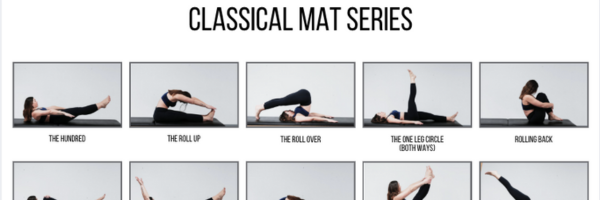
1945. The second contained the full sequence of thirty-four mat exercises, demonstrated
by Pilates himself, with text that was as much philosophy as instruction. "Civilisation
impairs physical fitness", he wrote. Contrology was the remedy.
The Elders and the Lineage
Joseph Pilates died in New York in 1967, at the age of eighty-three. He left behind a
studio, a system, and a small group of teachers who had trained directly under him.
These are known today as the Pilates Elders, or First Generation Teachers — among them
Romana Kryzanowska, Kathy Grant, Jay Grimes, Carola Trier, Ron Fletcher, Eve Gentry,
Mary Bowen, and Bruce King.
Pilates had never formalised a teacher training programme. His students learned
through consistent practice, observation, and direct instruction — through bodies and
hands, through the accumulated understanding that comes from years of working within
a system rather than reading about it. When he died, the responsibility for preserving the
method fell to these individuals, and each of them carried it differently.
Romana Kryzanowska stayed closest to the original system and is most commonly
associated with classical Pilates as it is taught today. She continued to teach until late in
her life and trained generations of instructors who carry the lineage forward. The
worldwide directory of classical Pilates instructors today lists teachers tracing their
training directly back to Joseph and Clara Pilates — a chain of transmission that matters
precisely because this kind of practice cannot be fully understood from a book.
Why the Story Matters
It would be easy to read the history of Joseph Pilates as background information —
interesting, perhaps, but separate from the practice itself. We think it is the opposite.
Understanding where the method came from helps you understand what it is trying to
do. Pilates developed his system in response to specific problems: the weakness and
limitation of his own childhood body; the confined, sedentary conditions of an
internment camp; the postural damage of twentieth-century life. He was not designing a
fitness programme for the wellness market. He was solving real problems with physical
intelligence.
That intelligence is still in the method. It is in the sequence, in the apparatus, in the
principles. It is in the fact that the exercises work — not because they have been validated by contemporary sports science, though many have been, but because they were refined over a lifetime of careful observation.
At Focus Pilates, we believe that understanding this history is part of practising the
method properly. The apparatus we make by hand in England is built to Pilates' original designs. Our teacher training traces its lineage to the first generation. The work is the
same work. The story is the same story.
It starts with a sick boy in Germany who decided he would not accept the body he was
born with. It ends, for each of us, wherever our practice takes us.