
In many contemporary studios, mat Pilates is what you do when the reformer is unavailable. In classical Pilates, the mat is where the method begins — and where its deepest lessons live.
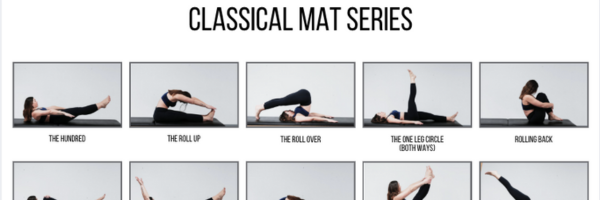
Joseph Pilates documented his method in full in Return to Life Through Contrology, published in 1945. The book contains thirty-four exercises, demonstrated by Pilates himself, with instructions that read as much like philosophy as technique. These exercises, in this sequence, form the bedrock of the classical practice. Every apparatus exercise is either a preparation for or an extension of something that exists on the mat.
What the Mat Demands
The mat is, in one sense, the most demanding place to practise. On the Reformer, the springs assist and resist. The Cadillac provides support for exercises that require it. Even the Chair offers the feedback of a pedal under the foot. The mat offers none of this. There is only the floor, the body, and what the body can actually do.
This is exactly why the mat sequence is so valuable. It is the purest test of whether the principles of the method have been internalised — whether the core is genuinely connected, whether the spine can articulate without compensation, whether the breath is genuinely coordinating the movement. On the apparatus, it is possible to compensate. On the mat, compensations are visible almost immediately to a skilled instructor.
A student who can perform the full classical mat sequence with genuine precision and control has a body that works well. Not perfectly — Pilates is a practice, not a state of completion — but fundamentally well.
The 34 Exercises
The sequence begins with the Hundred — a breathing and core activation exercise that raises circulation and focuses the mind. It moves through the Roll-Up, the Single Leg Circle, Rolling Like a Ball, the Single Leg Stretch, the Double Leg Stretch, the Spine Stretch Forward, and progressively more demanding exercises: the Corkscrew, the Saw, the Swan Dive, the Single Leg Kick, the Double Leg Kick, the Neck Pull, the Scissors, the Bicycle, the Shoulder Bridge, the Spine Twist, the Jackknife, the Side Kick series, the Teaser, the Hip Circles, the Swimming, the Leg Pull Front, the Leg Pull, the Kneeling Side Kick, the Side Bend, the Boomerang, the Seal, the Crab, the Rocking, the Control Balance, and the Push-Up.
From the relatively accessible to the genuinely advanced, the sequence moves with purpose. Each exercise prepares the next. Each works the body slightly differently from the one before. The whole takes a fit, well-trained body approximately forty-five minutes to complete — and most practitioners spend their careers learning to do it properly.
The Mat and the Apparatus
In classical Pilates, the mat and the apparatus are not separate practices. They are parts of the same system.
The apparatus is often used to teach the body what the mat exercises require. The Reformer helps a student feel the scoop of the abdominals during the Hundred before attempting it without spring support. The Cadillac supports the spine through the Roll-Over before the student takes it onto the floor. The Ladder Barrel develops the spinal extension needed for Swan before the student performs it on the mat. The direction of teaching can also run the other way — the mat work deepens what the student has learned on the apparatus, removing the support and asking the body to find it independently.
A teacher who understands this relationship teaches both better. This is why our six-hundred-hour instructor training at Focus Pilates covers the full mat repertoire alongside all the classical apparatus. The mat is the foundation. The apparatus is the system that builds it.
Coming to the Mat with Humility
There is a tendency in the contemporary fitness landscape to treat mat Pilates as the beginner option — the thing you do before you graduate to the reformer. Classical Pilates inverts this.
The full mat sequence, performed with genuine precision and in proper sequence, is not a beginner practice. The Teaser requires abdominal strength, hip flexor length, and spinal mobility that take significant time to develop. The Boomerang demands coordination and control that only consistent practice builds. The Push-Up, at the end of a well-performed sequence, tests everything the body has.
At the same time, the mat sequence is accessible. Modified versions of most exercises allow beginners to work within the sequence from their first session. The work grows with the student — always offering the next level of challenge just beyond the current reach.
That is the nature of a real practice. It does not have a ceiling.