
Joseph Pilates wrote in 1945 that "civilisation impairs physical fitness." He could not have known how precisely right he would turn out to be.
The human body was not designed to sit for eight to ten hours a day, bent at a desk or compressed into a chair, staring at a screen at close range. It was not designed to hold the same position for extended periods, to carry chronic low-grade tension across the shoulders and upper back, to walk far less than its architecture demands, and to do its most strenuous movement in thirty-to-sixty-minute bursts, a few times a week. And yet this is the reality for most adults in the modern world — and the effects on the spine are serious and cumulative.
Classical Pilates was designed to address almost all of them.
What Prolonged Sitting Does
The relationship between prolonged sitting and spinal health is well-documented. When the body is seated for long periods, the hip flexors shorten and tighten. The deep abdominal and gluteal muscles — those responsible for pelvic stability — become inhibited, allowing the pelvis to tilt and the lumbar spine to lose its natural curve. The upper back rounds. The chest closes. The head migrates forward of the shoulders.
This is not a matter of bad posture in the old-fashioned sense — a moral failing to be corrected by standing up straight. It is a structural adaptation. The body adapts to what it does most. When what it does most is sit still, it adapts to sitting still, and the muscles and connective tissues that support upright, dynamic movement grow weaker, shorter, and less responsive.
The result, for many people, is chronic low back pain, persistent neck and shoulder tension, reduced spinal mobility, and a quality of movement that feels effortful and restricted. These problems compound over years, and by the time most people seek help, the patterns are well established.
What Classical Pilates Does
The classical method addresses the modern spine from multiple directions simultaneously — which is one of the reasons it is more effective than isolated therapeutic exercises at resolving postural and movement problems.
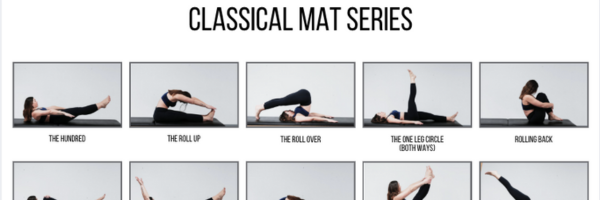
The mat exercises mobilise the spine through its full range of motion: flexion, extension, rotation, and lateral bend. They strengthen the deep abdominals and the muscles of the posterior chain — the muscles that support the spine from below and behind. They lengthen the hip flexors, open the chest, and develop the kind of integrated strength that supports good posture without effort, as a consequence of how the body has learned to organise itself rather than as a conscious act of will.
The apparatus deepens all of this. The Cadillac and Tower address the upper back and shoulder girdle through spring-based work that contemporary exercises rarely match. The Ladder Barrel opens the hip flexors and thoracic spine through supported extension. The Ped-o-Pul teaches the body to maintain length and lift in standing — which is where the work ultimately needs to live, since most of us are not in pain while we are lying on a mat but while we are moving through daily life.
The Corrective Logic of the Method
One of the things that distinguishes classical Pilates from a physiotherapy exercise programme is that it does not target specific muscles in isolation. The method works with the body as an integrated system — which is how the body actually works.
When a student has lower back pain driven by tight hip flexors and weak abdominals, a classical approach does not simply prescribe hip flexor stretches and abdominal strengthening exercises. It teaches the body to move differently — to find the deep core connection that takes load off the lumbar spine, to release the hip flexors through work that simultaneously strengthens the opposing muscles, to develop the awareness that allows good movement patterns to persist beyond the session.
This takes longer than targeted therapeutic exercise in the short term. It produces more complete and lasting results over time.
At Focus Pilates, we see this regularly in our studio in Frome. Students who come with chronic back pain, stiff thoracic spines, and the accumulated postural damage of desk-based careers find that the classical method addresses not just the symptoms but the movement patterns that created them. The work is careful, progressive, and honest. So are the results.
Prevention as well as Correction
It is worth noting that classical Pilates is not only a corrective practice. For students who begin before significant postural damage has accumulated — younger practitioners, athletes, dancers, those with active physical lives — the method is a powerful preventive tool.
A body that moves through its full range of motion regularly, that has genuine core strength and spinal mobility, that understands how to distribute load and find length, is a body that is significantly more resilient to injury and postural deterioration. The method builds this kind of body over time — not as a byproduct of other training goals, but as a direct aim.
Joseph Pilates believed that a normally developed body at any age was both possible and desirable. He practised his method until the end of his life. The evidence of its effects was, by all accounts, considerable.